
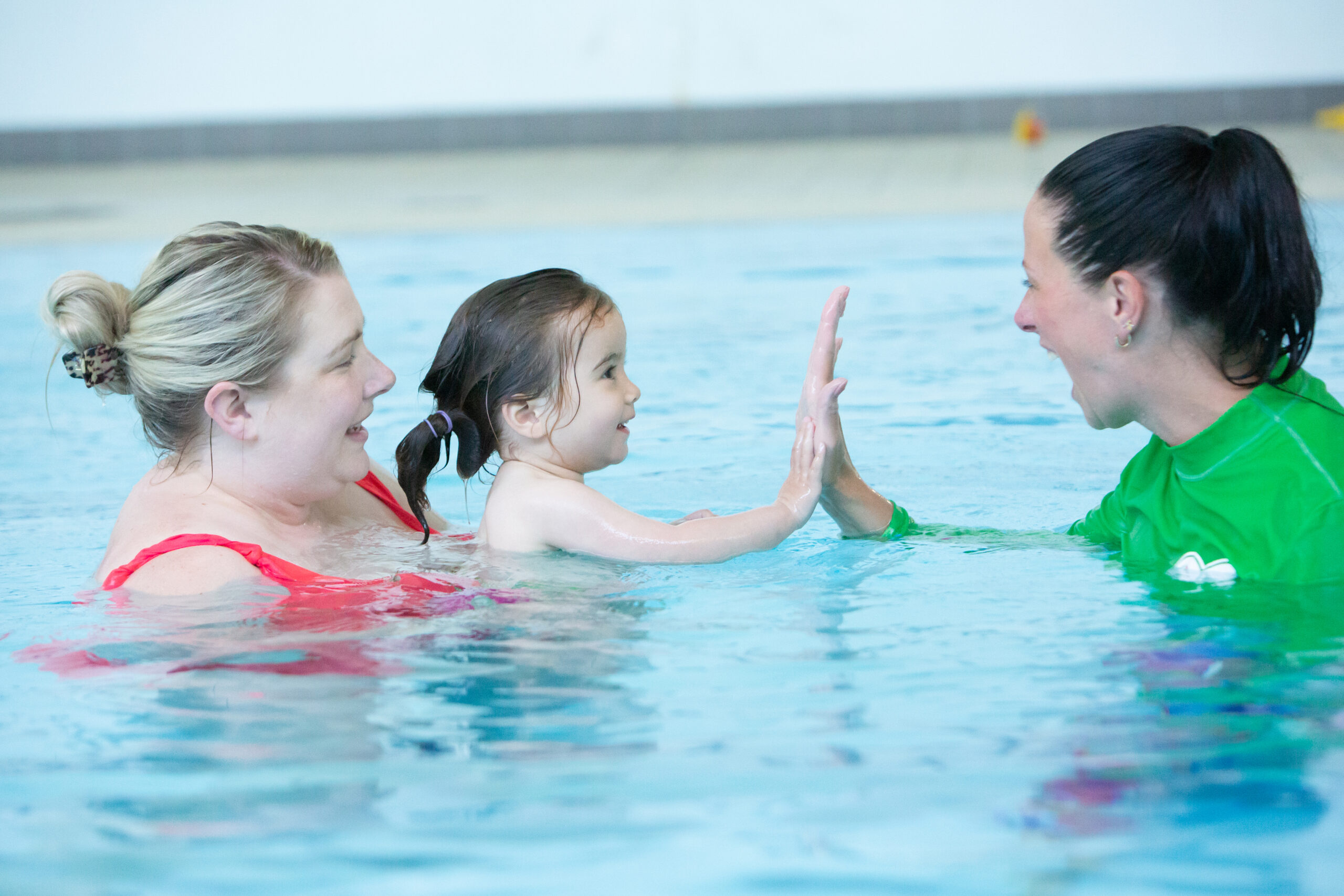
Every baby is different, so why should they all learn to swim in exactly the same way? Discover how a gentle, baby-led approach to swimming helps little ones build confidence, develop essential skills and, most importantly, learn to love the water.
For many parents, taking their baby swimming for the first time is an exciting milestone. But while some babies take to the water with immediate excitement, others need a little more time to feel comfortable. And that’s perfectly normal. Just as babies learn to crawl, walk and talk at different stages, they also develop confidence in the water at their own pace. This is where baby-led swimming makes such a difference.
Rather than expecting babies and toddlers to complete particular activities before they are ready, baby-led swimming puts the child’s comfort, confidence and individual development at the heart of every lesson. It’s a philosophy that Turtle Tots has embraced in its baby and toddler swimming classes, recognising that the happiest and most confident little swimmers are often those who are given the freedom to learn at their own pace.
What Exactly Is Baby-Led Swimming?
Baby-led swimming is a child-centred approach to teaching babies and toddlers to swim, where the emphasis is on responding to each child’s individual needs, abilities and emotional readiness.
In more traditional, instructor-led approaches, babies may be encouraged to complete the same activities at the same time, regardless of how comfortable they feel. Baby-led swimming takes a different approach. Instead of focusing solely on what a baby is being taught, it considers how the baby is feeling while they are learning. Teachers and parents pay close attention to a child’s body language, expressions and reactions, adapting activities to suit their confidence and readiness.
For example, one baby might happily splash, kick and explore the water from their very first lesson. Another might prefer to spend their first few classes being gently supported by a parent, watching what’s happening around them. With baby-led swimming, both experiences are equally valuable.
The aim isn’t to rush babies through swimming milestones. It’s to create positive experiences that allow confidence and swimming skills to develop naturally.
Why Is Following Your Baby’s Lead So Important?
Babies communicate long before they can speak. Through facial expressions, movements, sounds and body language, they tell us when they’re happy, curious, uncertain or uncomfortable. A baby-led swimming teacher recognises these signals and responds accordingly. If a baby is enjoying an activity, they can be encouraged to continue exploring. If they’re hesitant or upset, the activity can be adapted, slowed down or left for another day. This helps create an environment where babies feel secure, supported and understood. And when children feel safe and comfortable, they’re often more willing to explore, experiment and try something new.
Importantly, baby-led swimming doesn’t mean allowing children to do whatever they want. Lessons remain carefully structured, with age-appropriate activities designed to develop swimming skills. The difference is that the teaching adapts to the child, rather than expecting the child to adapt to the teaching.
The Benefits of a Baby-Led Approach
Building Genuine Water Confidence, Not Just Compliance
There’s a big difference between a baby completing an activity because an adult has guided them through it and a baby willingly participating because they feel comfortable and confident. Baby-led swimming focuses on developing genuine confidence. By allowing children to become familiar with the water gradually, they can learn to associate swimming with enjoyment, security and positive experiences. This is particularly important for babies who are naturally more cautious or sensitive to unfamiliar surroundings. Rather than being rushed, they’re given the reassurance and time they need to become comfortable.
Over time, these positive experiences can encourage children to become more adventurous and willing to explore the water independently, while remaining safely supported.
Helping Prevent Negative Experiences and Fear of Water
One of the most important principles of baby-led swimming is that children should never be unnecessarily forced into activities that cause them distress. For example, putting a baby’s face underwater before they are comfortable may create a negative experience.
In a baby-led class, underwater activities are approached with particular care, taking account of the child’s readiness and response rather than treating submersion as a milestone that every baby must achieve. Some babies may become comfortable with putting their faces in the water relatively quickly, while others need much longer. And that’s absolutely fine. By respecting these differences, baby-led swimming aims to reduce unnecessary distress and help children build a positive relationship with water.
Encouraging Children to Learn Through Play and Exploration
Babies and toddlers are naturally curious. They learn about the world by exploring, experimenting and repeating activities they enjoy. Baby-led swimming uses this natural curiosity to introduce important swimming movements and skills. Reaching for floating toys, splashing, kicking, holding on to the poolside and moving through the water with parental support can all become valuable learning opportunities. Rather than simply being directed through a series of exercises, children are encouraged to actively participate in their own learning. This playful approach can help develop coordination, body awareness and early swimming skills while keeping lessons engaging and enjoyable.
Building Trust Between Baby, Parent and Teacher
For a baby, the swimming pool can be an unfamiliar environment filled with new sounds, sensations and experiences. Having a parent or carer close by provides reassurance and security. In baby-led swimming, parents play an essential role in helping their little ones feel comfortable. Teachers guide parents in recognising their baby’s signals, understanding when to encourage an activity and knowing when to give their child more time. This responsive approach helps strengthen the trust between parent and child, while making swimming a shared experience rather than simply a lesson. It can also give parents greater confidence in supporting their child’s development both in and out of the pool.
Supporting Individual Development Rather Than Comparing Milestones
Every parent knows that children develop at different rates. One toddler might be walking confidently while another is still finding their feet. The same applies to swimming. Some children will quickly become comfortable putting their faces in the water, while others may initially prefer practising kicking, floating or moving towards a parent.
Baby-led swimming recognises that progress isn’t always linear. A child might enthusiastically participate one week and need extra reassurance the next. Rather than viewing this as a setback, a baby-led approach adapts to the child’s needs on that particular day. Success isn’t measured by how quickly a baby achieves a swimming milestone, but by the confidence, enjoyment and skills they develop along the way.
What Does a Baby-Led Swimming Class Actually Look Like?
A baby-led swimming class is still a structured swimming lesson, but with flexibility built into the teaching. Teachers introduce activities through songs, games, toys and gentle movements, while observing how each baby responds. For example, during an activity designed to introduce water to the face, one baby might happily enjoy gentle splashes, while another may be more comfortable simply watching or playing with the water using their hands. Both children can participate in ways that suit their readiness. Similarly, when introducing floating, a teacher might encourage parents to gradually adjust the level of support as their child becomes more comfortable. The important thing is that children are encouraged, never rushed.
As babies grow into toddlers, the same principles continue. Children are supported in becoming more independent, exploring new movements and developing swimming skills at a pace that suits them. This combination of structured teaching and individual flexibility is what makes baby-led swimming such a positive approach.
Does Baby-Led Swimming Mean Children Learn More Slowly?
It’s a question some parents naturally ask. If children aren’t being pushed to complete activities, does that mean they’ll take longer to learn? Not necessarily.
Baby-led swimming isn’t about avoiding challenges or slowing down learning. It’s about introducing the right challenges at the right time. When children feel comfortable and motivated, they’re often more willing to participate, practise and explore. A baby who has developed a positive relationship with water may be more receptive to learning new skills as they grow. Although every child’s progress will differ, the aim is to build a strong foundation of confidence and enjoyment alongside the gradual development of swimming ability. After all, learning to swim is a journey that takes years, not weeks.
Why Turtle Tots Believes in Baby-Led Swimming
At Turtle Tots, baby-led teaching is at the heart of our approach to swimming. We believe that babies and toddlers learn best when they feel happy, secure and confident, which is why our lessons are designed to respond to each child’s individual needs. Our teachers understand that every little swimmer is unique. Some babies arrive ready to splash and explore, while others prefer to take their time. Our role is to encourage, support and gently guide each child, without putting them under unnecessary pressure.
Through carefully structured activities, play and positive interaction, we help babies and toddlers gradually develop their swimming skills while nurturing their natural curiosity. We also work closely with parents, helping them understand their child’s responses and become active participants in their swimming journey. For us, baby-led swimming isn’t about achieving milestones as quickly as possible. It’s about helping children develop the confidence, skills and enjoyment that will stay with them as they grow.
A Positive First Experience Can Make All the Difference
Introducing your baby to swimming should be something both of you look forward to. There will be splashes, smiles, giggles and plenty of proud moments along the way. There may also be days when your little one needs a little extra reassurance. That’s all part of learning.
By choosing a baby-led approach, parents can give their children the opportunity to discover the water in a positive, supportive environment where their individual needs are respected. And while no swimming lesson can make a young child drown-proof, building confidence, water awareness and early swimming skills can be an important part of their ongoing swimming education. Ultimately, the greatest gift we can give our little swimmers isn’t simply teaching them to complete a particular movement or activity.
It’s helping them feel happy, confident and comfortable in the water, creating the foundations for a lifelong love of swimming.
To discover more about Turtle Tots’ baby-led approach to swimming and find baby and toddler swimming classes near you, visit www.turtletots.ie
Share this post